On September 18th, we with my personal guide took a trip around North Ossetia. Though we didn't go into the state of South Ossetia, we were near its border.
We went from the city to the west and took a turn onto Trans-Caucasian highway. Its difference from Georgian Military Road is that it advances through South Ossetia right into its capital of Tskhinval, right on the Georgian border.
You can't go further.
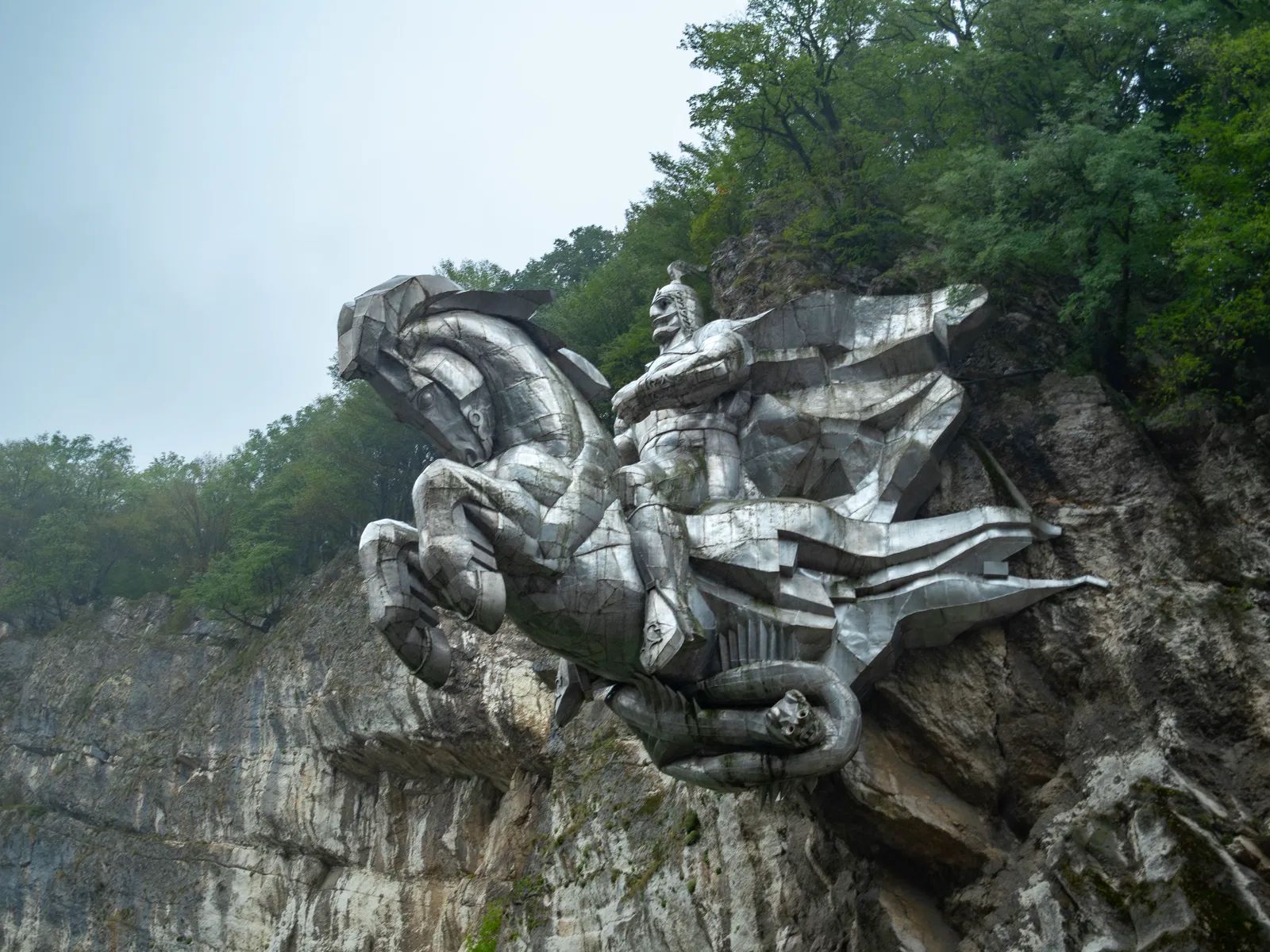
Leaving the foothills into a mountain pass, we stopped at the Uastyrdzhi monument. So, let me give you a short historical context, for 30 seconds, 1 minute at most. I will be brief.
You might know the Saint George, the Christian martyr, and his legend of defeating the Dragon, illustrated on the coats of arms of Georgia and Moscow.
But the script about this story (XI c.) came much later, than his hagiography (V c.). It probably got derived from the similar myth of the saint Theodore Tiron (V-VII c.).
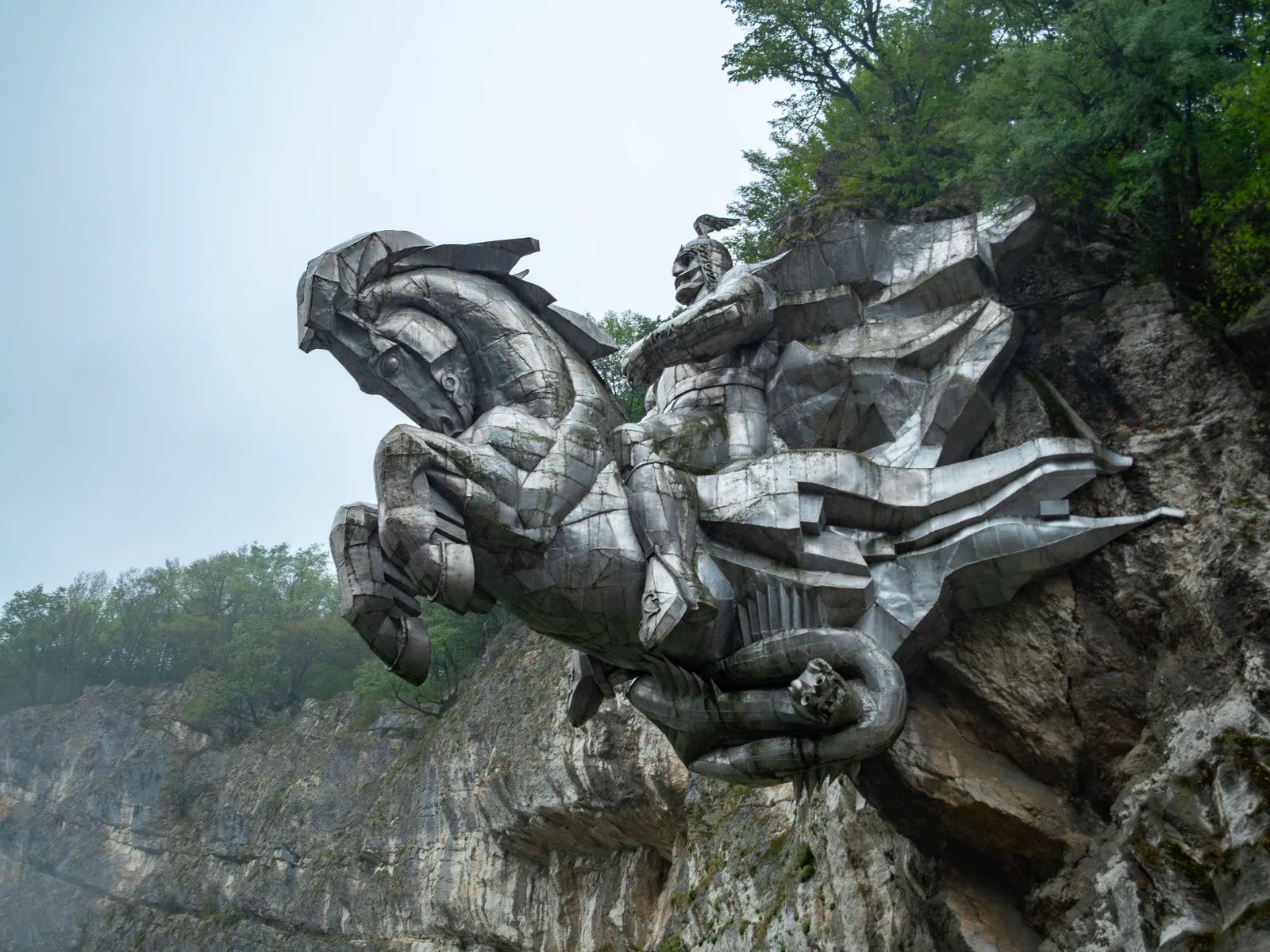
This myth, on the other hand, has an ancient origin. It was either (or both) the myth about Jason & Medea or the one about Perseus & Andromeda.
There is a good base for these stories getting derived from Iranian mythology, where such a motive originated much earlier.
You can try to go down this trail further and, maybe, face the Indian origin. But the point is -- Ossetians are an Iranian ethnic group!
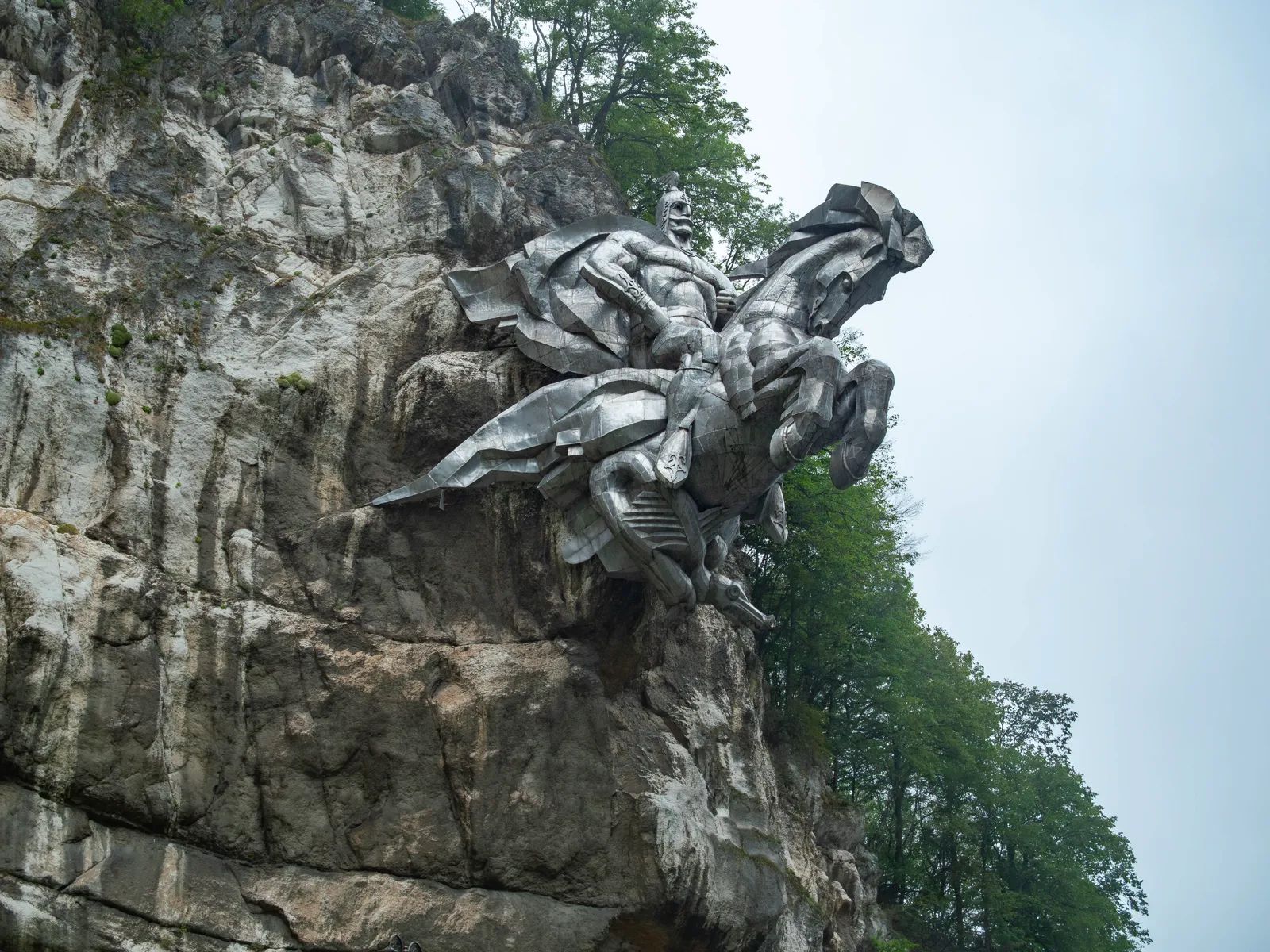
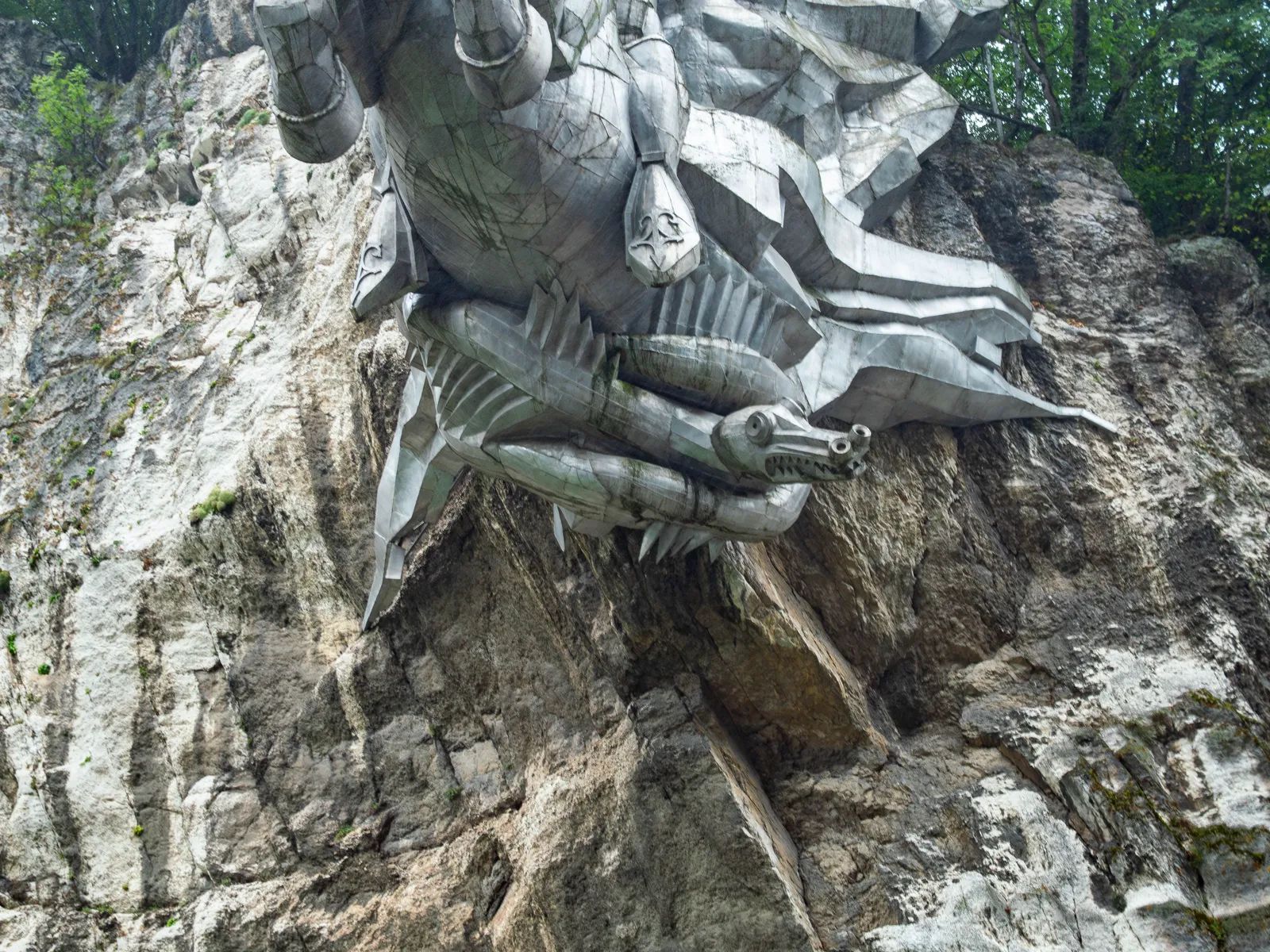
So the Ossetians have been having this dragon-fighting myth for a long time, and it's included into the Nart saga. And with the Christian baptism of Ossetians in X century, the religion got well with the local culture. And so came Uastyrdzhi, the patron of male gender, defeating the Dragon.
The cherry on top is that the name of Uastyrdzhi is derived from Wac Gergi, which one can translate as Saint George.
The Nart saga is not unique to the Ossetians, by the way. Neighboring ethnicities like Ingushes and Kabardians got highly influenced by it as well.
So where was I?
Globally the mythology is a tightly connected world. Even the Native Americans have something in common with Europeans, when it comes to saga stories and history; Eurasia is even more so.
Thanks for reading!